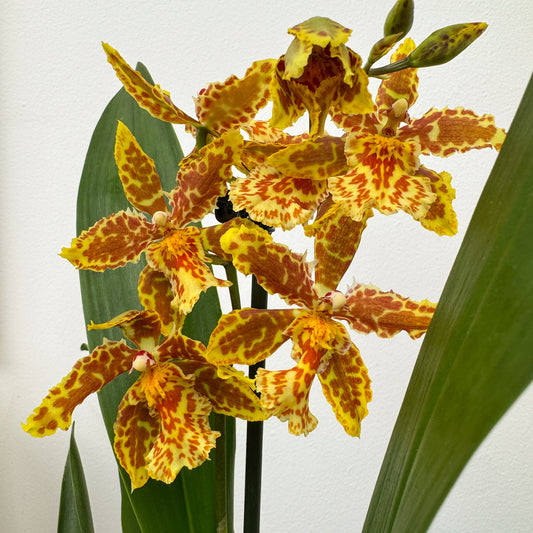
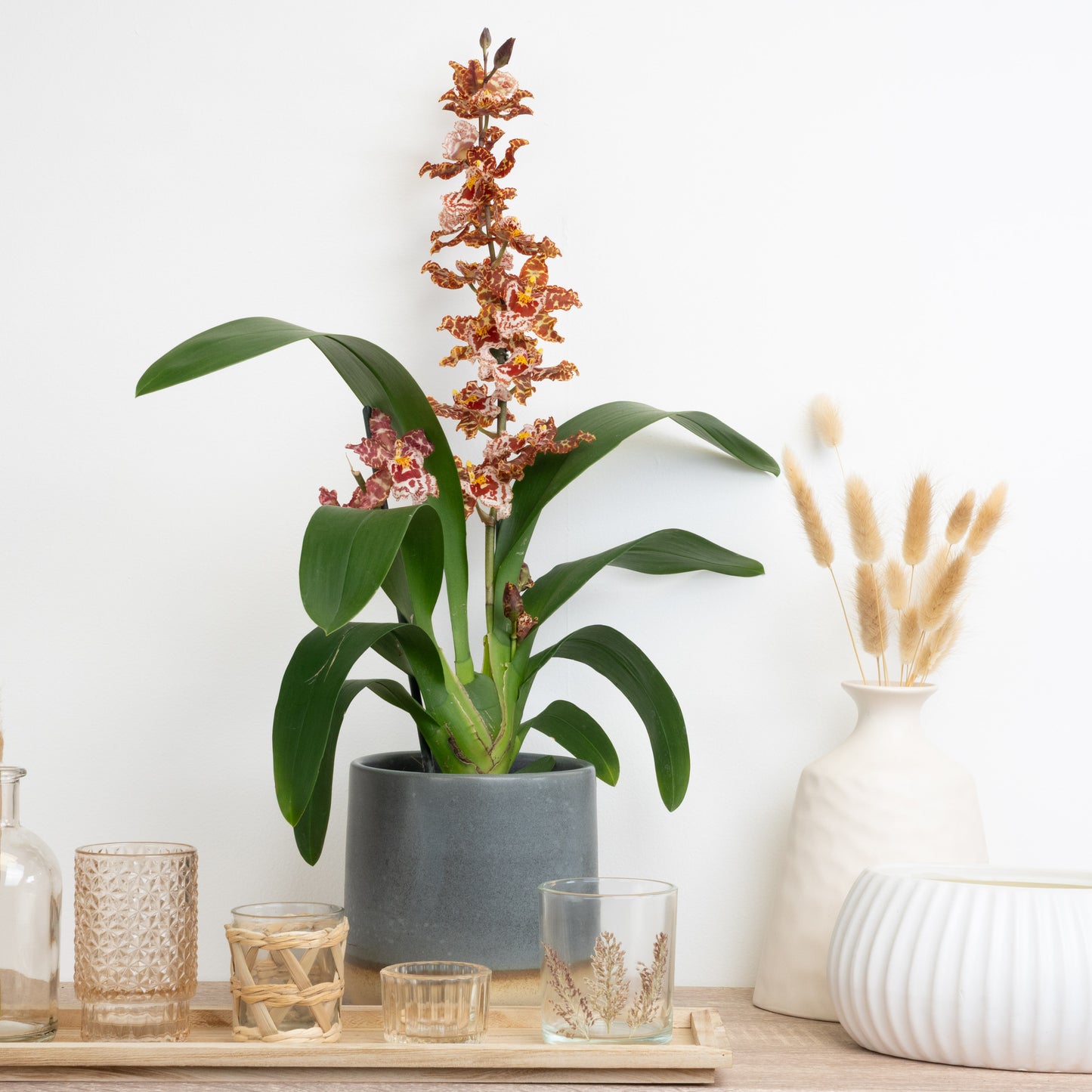
Cambria Orchid | Gold Leopard
Orchid Plants | By Orchidique
Couldn't load pickup availability
(12 cm)
(12 cm)
(12 cm)
(12 cm)
(12 cm)
(12 cm)
(12 cm)
(12 cm)
(12 cm)
(13 cm)
(12 cm)
(12 cm)
(12 cm)
Cambria Orchid ‘Gold Leopard’ is a striking, exotic variety, featuring golden yellow blooms layered with bold red-brown spotting and intricate patterning across each petal. The star-shaped flowers create a dramatic, leopard-like effect, giving the plant a vibrant and eye-catching presence. Its rich contrast of warm golds and deep markings delivers a bold, tropical feel while still retaining the refined elegance of the Cambria family.
Perfect for standout gifting or adding a statement focal point to modern interiors, this orchid brings energy and texture to any space. Each plant is carefully selected and handwrapped for a premium presentation, then delivered across the UK ready to impress from the moment it arrives.
Please note: Ceramic pots are sold separately.
Share

Other Names For Cambria Orchids
Vuylstekeara, Cambria-Cross Orchid, Cambria-like Orchids, Beallara, Burrageara, Colmanara, Odontonidium, Beallara, Burrageara, Colmanara, Miltonidium, Odontonidium, Odontoglossum, Vuylstekeara, Brassia, Cochlioda, Miltonia, Oncidium.
Note that "Cambria" is a broad commercial name that encompasses various intergeneric hybrids, and some of these other names (like Vuylstekeara) are specific types of hybrids that fall under the Cambria category. However, not all of these names are direct synonyms for Cambria orchids; they are related hybrids within the same broader group.
Caring For Your Cambria Orchid
Lighting
Bright, indirect light is ideal for Cambria orchids, but they can tolerate more light than Phalaenopsis. Place near an east or south-facing window for optimal growth. While direct sunlight can cause sunburn, Cambrias can handle up to 2-3 hours of gentle morning sun, which is more than most Phalaenopsis can tolerate.
Watering
Water Cambria orchids more frequently than Phalaenopsis, typically every 4-7 days depending on the environment. In summer, it may be as often as every 3-4 days, while in winter, it can be less frequent (up to 7-10 days). Use lukewarm water and ensure the potting medium is moist but not waterlogged. As with Phalaenopsis, avoid getting water on the crown to prevent rot.
Humidity
Maintain a humid environment for Cambrias, ideally between 40% and 70% relative humidity. While they prefer high humidity like Phalaenopsis, Cambrias can tolerate slightly lower levels. Use a tray with pebbles and water to create a humid microclimate without sitting the pot in water.
Temperature
Cambrias prefer cooler temperatures than Phalaenopsis. Daytime temperatures should be between 18°C and 24°C. A more significant drop in temperature at night is beneficial for Cambrias; aim for around 13°C on cooler nights. This temperature fluctuation (about 6-8°C difference) can help induce blooming more readily than in Phalaenopsis.
Fertilisation
Use a balanced fertiliser (such as 20-20-20) for Cambrias, applied more frequently than for Phalaenopsis during the growing season. Fertilise every 1-2 weeks with a diluted solution. Reduce frequency to monthly during winter or when the plant is not actively growing.
Repotting
Repot Cambria orchids every 1-2 years or when the potting medium breaks down, similar to Phalaenopsis. Use a well-draining orchid potting mix, trim any dead roots, and choose a pot slightly larger than the root system. Cambrias may need repotting slightly more frequently than Phalaenopsis due to their faster growth rate.
About Cambria Orchids
Cambria is a commercial name for intergeneric hybrid orchids that that typically involve crosses between Odontoglossum, Cochlioda, Miltonia, Oncidium, and Brassia genera. Cambria orchids do not grow in the wild; they are specifically bred hybrids. All Cambria orchids are part of the larger Oncidium alliance or Oncidiinae group. The Cambria group includes various intergeneric hybrids, encompassing orchid species such as Beallara, Burrageara, Colmanara, Miltonidium, Odontonidium, Odontoglossum, Vuylstekeara, Brassia, and others. The first Cambria hybrid, named Cambria Vuylstekeara 'Plush', was created around 1900 by crossing Odontoglossum with other orchid genera like Cochlioda, Miltonia, Oncidium, and Brassia.
Other Cambria Orchids You May Like:
-
Cambria Orchid | Renaissance
Regular price £29.99Regular priceUnit price / per£33.99Sale price £29.99Sale -
Cambria Orchid | Zesty
Regular price From £27.99Regular priceUnit price / per£32.99Sale price From £27.99Sale -
Cambria Orchid | Barrocco Red
Regular price From £29.99Regular priceUnit price / per£34.99Sale price From £29.99Sale